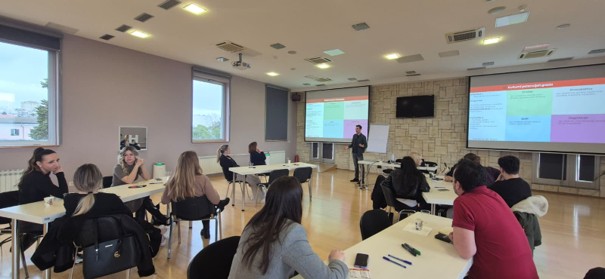
From late March to early July, Zadar, Šibenik, Pag, Slunj and Drniš hosted the workshops “Culture in the Community – Identifying Local Potential”. Through conversations with residents, pupils, students, retirees, and representatives of institutions and associations, a range of questions concerning cultural life in these cities were explored, while participants also proposed concrete ideas for enriching it.
The “Community Potential” programme is implemented by the National Foundation for Civil Society Development in cooperation with four i3.0 Strategic Partners and the cities participating in the programme. Each partner provides support to local communities within its respective field of activity, with Šibenik Fortress of Culture serving as the i3.0 Strategic Partner for the field of culture.
The “Culture in the Community” workshops are led by Vlatko Macanić from the Department for International Cooperation and Projects and Karla Papeš from the Department for Heritage Research and Interpretation. Following five workshops and a summer break, the series continues in Karlovac, Biograd na Moru and Duga Resa.
From Conversation to Concrete Ideas
Each workshop begins with a simple question: what does culture mean to us? Participants’ responses quickly reveal just how broad the concept is. Culture is not limited to artistic programmes, cultural institutions and heritage sites. It also encompasses people, customs, ways of life, gathering places, local stories and everyday experiences that give a city its distinctive identity.
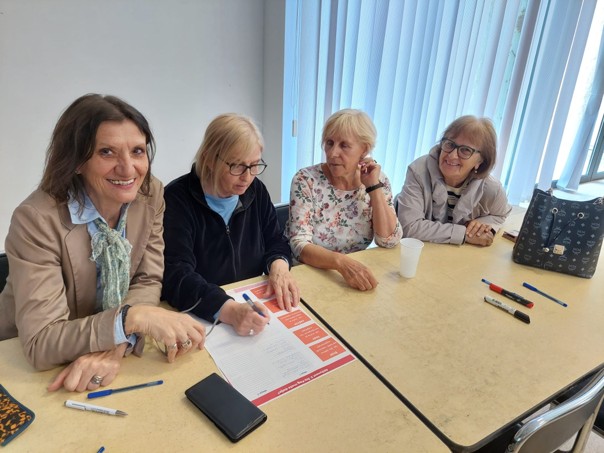
Following a brief presentation of examples of good practice, participants discuss the identity of their city and work together to identify its cultural potential. They consider what already exists, as well as places, stories and customs that may not yet have received sufficient recognition. They then identify what they consider important for their community and propose new activities and content.
Although each city has its own particular characteristics, similar questions frequently emerged during the discussions. How can more residents be encouraged to participate in cultural life? How can young people be engaged and motivated? How can access to information be improved, and how can institutions, associations and other organisations active within the community work together more effectively?
The first workshop was held in Zadar, where discussions focused on the wealth of cultural heritage that is not always sufficiently visible to local residents, the need for better coordination between cultural institutions and organisations, and the importance of involving young people. Proposals included a summer festival combining water sports with a music programme, as well as themed city walks incorporating augmented reality.
Participants in the Šibenik workshop discussed ways of making information about the city’s many cultural events easier to navigate, providing more content for young people, and ensuring that the needs of local residents have a greater place within the city’s extensive cultural offer. Proposals included intergenerational activities, themed walks and the use of neglected urban spaces for new programmes.
At the workshop in Pag, the strong connection between residents and local tradition, heritage and identity was particularly evident. Participants proposed new activities in historic spaces, the restoration of Skrivanat Tower, and the documentation of the dialects spoken in Pag’s settlements to help pass them on to younger generations.
Natural and cultural heritage, the restoration of neglected buildings, and connections with other cities and communities were the main topics discussed in Slunj. One idea that stood out was the revitalisation of bridges in Slunj, Rastoke and the surrounding area through new activities developed in cooperation with local residents.
The first part of the workshop series concluded in Drniš, bringing together secondary school students, university students, retirees, representatives of institutions and members of local associations. Ideas developed during the workshop included an interactive treasure hunt, a virtual tour of rural life, and the renovation of the bowling alley as a year-round space for socialising, recreation and community gatherings.
One thing became clear throughout the process: there is no shortage of ideas. For these ideas to become reality, however, better coordination, funding, cooperation and regular communication between residents, institutions and associations are needed. Workshops like these give people from the same community an opportunity to compare different perspectives and discuss their needs openly and concretely.
Workshops Continue in Karlovac
The autumn part of the workshop series begins on Thursday, 10 September, in the Congress Hall of the Aquatika public institution in Karlovac. The workshop will take place from 10 a.m. to 1 p.m. and is open to everyone interested in discussing the cultural life of their city, its distinctive characteristics and opportunities for its further development.
Through conversation, examples of good practice and collaborative activities, participants will work together to identify Karlovac’s cultural potential and propose activities and content that could enrich life within the local community. As a token of appreciation for their participation, they will also receive a one-year membership in the Friends Club of Šibenik Fortress of Culture.
Following Karlovac, workshops will be held in Biograd na Moru on 22 October and Duga Resa on 5 November, completing the series of meetings across eight cities.
Each of these cities experiences culture in its own way and recognises different opportunities within it. At the same time, the workshops held so far have demonstrated just how similar the needs and challenges of different communities can be. Ultimately, culture is not shaped solely by institutions and programmes. It is also shaped by people, their experiences and ideas, and their willingness to participate in the life of the place they call home.